The Best Resources for SAT and ACT Preparation
By
AtomicMind Staff
February 12, 2026
•
3
min read
Share this Article
Simply highlight text to share on social or email
Once families decide that SAT or ACT prep is necessary, they usually hit the same wall.
There are too many resources.
Free platforms. Paid platforms. Apps. Tutors. Books. Courses. Advice that ranges from “start in 9th grade” to “don’t prep at all.” The result is often confusion, followed by either over-prepping or paralysis.
The truth is simpler: most students only need a small number of well-chosen resources, used intentionally and at the right time.
Below is a curated list of the most effective SAT/ACT prep resources: what they’re good for, who they’re best suited to, and where families often go wrong.
1. Khan Academy (Best Free Foundation for the SAT)
Khan Academy remains the most reliable free starting point for SAT prep, largely because it is officially partnered with the College Board and mirrors the structure of the digital SAT closely.
Best for:
- Students early in the prep process
- Diagnostic testing and baseline assessment
- Building familiarity with SAT question types
- Low-pressure skill reinforcement
Limitations:
- Less helpful for advanced score gains
- Limited ACT alignment
- Requires strong self-discipline
Khan Academy works best as a foundation, not a complete plan.
2. College Board Official SAT Practice Tests
Official practice tests are non-negotiable. They are the most accurate representation of what students will see on test day and anything that replaces them is a downgrade.
Best for:
- Full-length, realistic practice
- Timing and pacing work
- Identifying score ceilings
- Final-stage prep
Common mistake: Students take too many full tests without reviewing mistakes meaningfully.
Practice tests should be tools for diagnosis, not endurance exercises.
3. ACT Official ACT Resources
For students taking the ACT, official ACT materials matter just as much as College Board materials do for the SAT.
Best for:
- Understanding ACT pacing and structure
- Science section familiarity
- Timing-heavy practice
Because ACT pacing is more aggressive, students often underestimate how different the experience feels compared to the SAT. Official materials make that difference clear early.
4. High-Quality Prep Books (Targeted, Not Stacked)
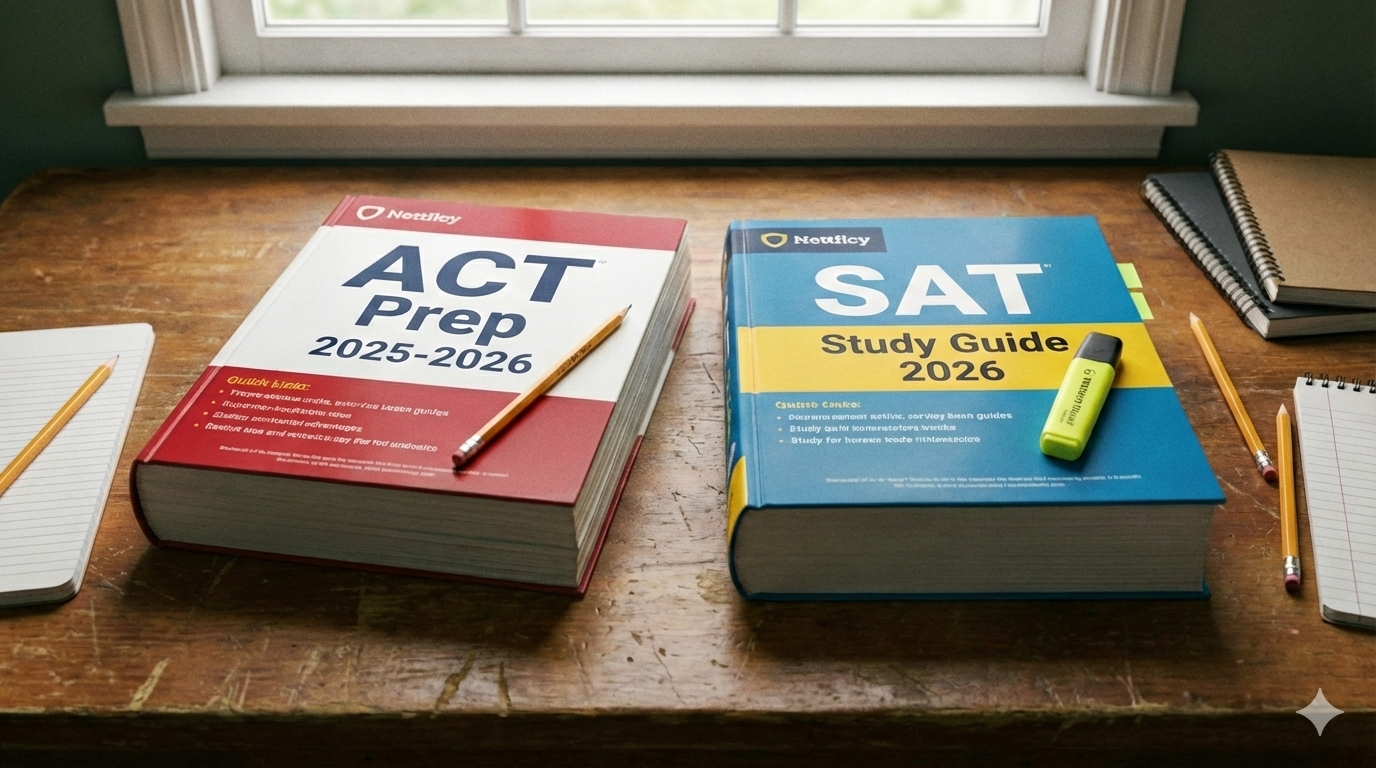
A small number of prep books can be helpful (one per subject at most) especially for students who prefer structured explanations over digital platforms.
Well-regarded options include:
- College Panda (math-focused students)
- Erica Meltzer (reading and grammar)
- ACT-specific strategy guides for science
Best for:
- Students who learn well from written explanations
- Targeted content gaps
- Offline study
Avoid: buying multiple overlapping books “just in case.” That usually creates confusion, not clarity.
5. Adaptive Online Prep Platforms (Use Selectively)
There are many paid online platforms offering adaptive SAT/ACT prep. Some are useful; many are redundant.
Examples:
- Magoosh (SAT & ACT Prep): Offers self-paced video lessons, practice questions, and progress tracking in an easy online interface that’s especially good for students who prefer structured but flexible study. 
- Magoosh SAT Prep: https://magoosh.com
- Magoosh ACT Prep: https://magoosh.com/act/
- UWorld SAT & ACT: Known for high-quality practice questions and detailed explanations that help students understand why answers are right or wrong. (Often rated highly in prep course guides alongside Kaplan and Princeton Review.) 
- Test Innovators: A newer platform with personalized practice on SAT/ACT problems, advanced analytics, and tools tutors can use to target weaknesses. 
These platforms can help with:
- Repetition and consistency
- Question exposure
- Independent practice between sessions
They are not substitutes for strategy, pacing guidance, or anxiety management.
Families should be cautious of platforms that promise dramatic score increases without addressing how those gains happen.
6. School-Based or Group Test Prep Courses
Group courses can work in specific circumstances, particularly when schools offer structured prep integrated into the academic schedule.
Best for:
- Students who need external accountability
- Introductory exposure to test structure
- Families seeking lower-cost options
Limitations:
- One-size-fits-all pacing
- Limited personalization
- Minimal attention to anxiety or test psychology
Group prep can be a starting point, but it rarely produces top-range scores on its own.
7. AtomicMind Test Prep & Private 1:1 Coaching
This is where most families finally realize what’s been missing.
AtomicMind does not treat SAT/ACT prep as a standalone task. It’s integrated into the larger admissions strategy, which is why it works.
Through AtomicMind, students receive:
- Private 1:1 coaching tailored to their learning style
- Help choosing between SAT and ACT (early, not after wasted attempts)
- A realistic testing timeline (usually 2–3 sittings max)
- Pacing and strategy training, not just content review
- Anxiety management grounded in preparation, not platitudes
- Alignment between test prep and school list strategy
Best for:
- Students aiming for selective or highly selective schools
- Students whose anxiety interferes with performance
- Families who want clarity, not trial-and-error
- Students who are strong but underperforming on tests
AtomicMind’s role isn’t to replace all other resources; it’s to orchestrate them so effort leads to results.
8. What Matters More Than the Resource List
Families often ask which resource is “the best.”
That’s the wrong question.
The right questions are:
- When should we start?
- How many times should we test?
- Which test fits this student better?
- What score range actually matters for our school list?
- When should we stop prepping?
No app or book answers those questions on its own.
Common Pitfalls to Avoid
Even strong students fall into predictable traps:
- Using too many resources at once
- Taking test after test without analysis
- Starting too late and cramming
- Letting anxiety drive decisions
- Confusing effort with effectiveness
More prep is not better prep. Smarter prep is better prep.
Final Takeaway
There is no shortage of SAT/ACT prep resources. The challenge is knowing which ones to use, when to use them, and when to stop.
Free tools build foundations. Official materials provide accuracy. Books and platforms fill gaps. But strategy, pacing, and personalization are what turn preparation into performance.
If you want help choosing the right resources and using them effectively, book a free college admissions session. We’ll help you build a test prep plan that fits your student, your timeline, and your goals, without wasted effort or unnecessary stress.

Share this Article